Episode Transcript
[00:00:00] Speaker A: For more information on Ancient Dragon Zen Gate, please visit our website at www.ancientdragon.org. our teachings are offered to the community through the generosity of our supporters. To make a donation online, please visit our website.
It seems like everyone who's here has been here before, even though it is the first time.
So that's sort of our theme for today, for this morning.
Feels very wonderful to sit together in the sendo with all the dragon bodhisattvas inhabiting the ground and the sky.
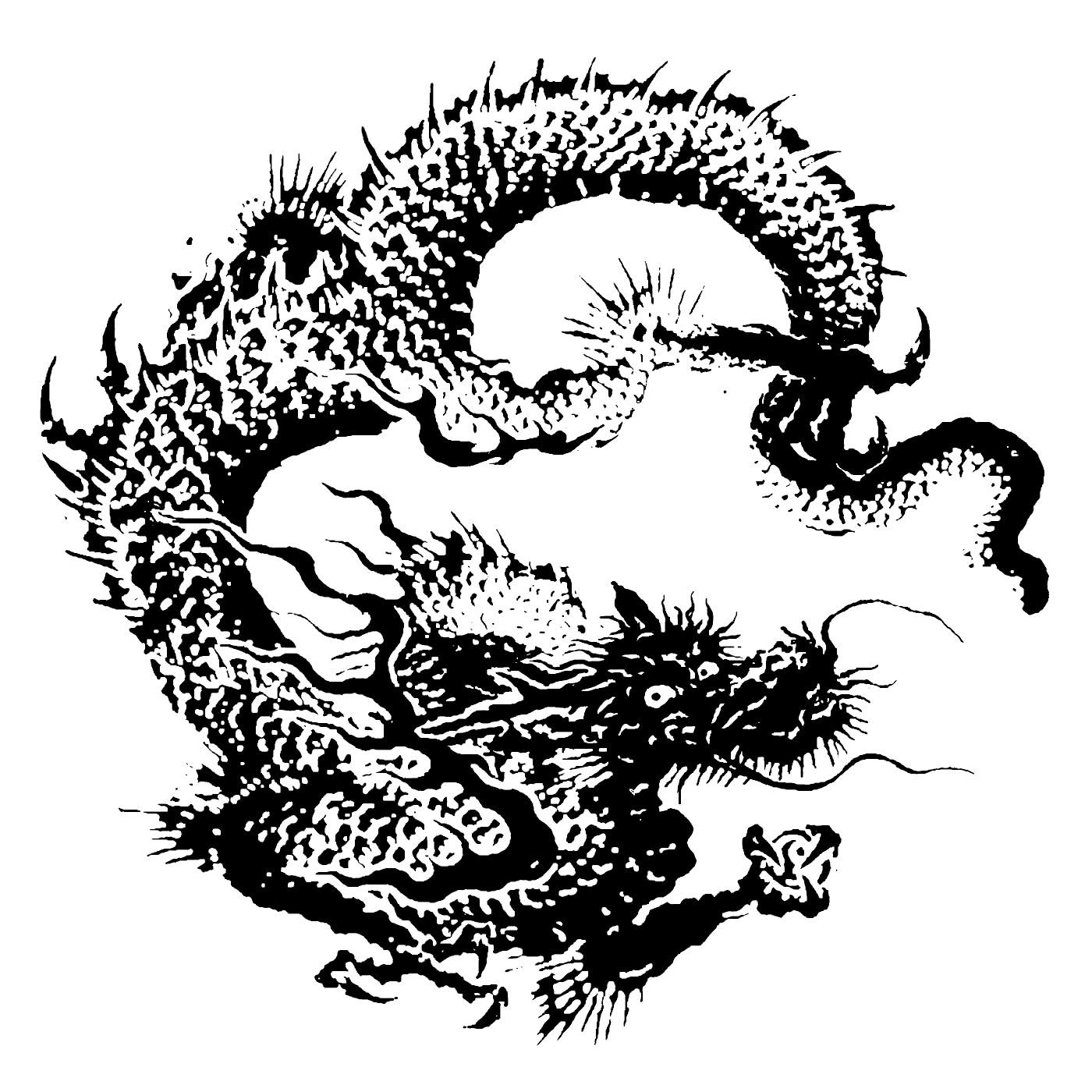
You know, I think most people know, but even if you do, it's good to consider the dragon.
You know, in Zen Buddhism, dragons are symbols of like adept Zen practitioners, free roaming dragons.
Dragons are the whole body and mind that awakens in your zazen.
So zazen is kind of a dragon itself.
And the ground dragons here in Lincoln Square join with the cloud dragons online.
And we swim together in the vast lake of Zazen, sporting dragons, sporting in zazen.
And we live by a great lake, another habitat for dragons. And I just thought I would mention that actually the word Michigan michigama is a Native American word for great lake or big water.
So when we sit together in this stillness in the samadhi, the deep awareness of the bodhisattva on the shores of Lake Michigan, we're like in this natural dragon habitat.
Clouds, ground water, trees all around us.
And our zazen bodies are open water swimming.
If you do that, go out into the lake and swim and swim in the swells, in the cold water, it's sometimes terrifying, actually, and I don't necessarily recommend it unless you feel up for it and usually with the swimming companion, because sometimes people are like, yeah, Hogetsu's like, go out in that lake and swim like a dragon. And then, you know, unless you're up for it, that lake is serious territory, just like our zazen.
And in this kind of swimming, this dragon swimming, this zazen body, dragon zazen body enters not knowing, which is the best way to swim in unknown open waters.
Not knowing and being very humble and curious and aware.
And then when we enter. Not knowing, no. The boundless contours and depths of the vast lake of reality appear or are discovered in our awareness.
You know, we can almost feel that there's been a lot of humidity out lately in Chicago. So it's almost like we've been breathing in the, like, you know, learning that like a fish, maybe dragons can breathe in deep waters.
But moving on a little, moving on just a little from dragon practice or maybe offering another spin or facet of dragon practice.
I've been thinking about some words in the Song of the Precious Mirror Samadhi.
This song by our 19th century Chinese ancestor Dongshan, this Dongshan describes Buddha's teaching as a dynamic journey of discovery, discovering, continually discovering, again and again.
And in this journey, stillness and movement are not opposites.
And in this Song of the Precious Mira Samadhi, which you know are in our chant books somewhere and online accessible immediately for those who want to, like, pull it up.
Tungshan offers practice instruction, how to sit, how to live in reality from the mind and heart of the Bodhisattva.
So here's a practice instruction that I've been working with.
Penetrate the source and travel the pathways.
Embrace the territory and treasure the roads.
So this journeying in Zen practice is leaving the familiar and entering that which appears as unknown.
In that unknowing, we actually know a breath by breath. Each moment of Zazen teaches us how to venture, how to enter, how to inhabit the unknown.
If our bodies and our hearts, our awareness, our being, if it's open, if we're open to such a teaching, you know, sometimes you're not okay, sometimes I'm not like, no, I just want what I know, you know?
But I think our great ancestor implies that complete presence with the unknown is required to travel vital new pathways.
Complete presence is embracing the territory of the present moment, the contours and features so we don't numb out in Zazen, or if we do, we try to come back to the breath, to the moment, to the feel of the ocean of reality.
We return to this territory of the present moment.
And this is complete presence.
And Zazen, you may have noticed, invites us into pathways out of the comfort zone, out of well practiced habits that actually deaden experience.
You might notice that when you're like, oh, I'm sitting great.
And then all of a sudden, you know, you get an itch or you hear a noise and you start to feel irritation, or you're like, I want to move, I don't want, you know, all this stuff happens.
But then you find a way out of that.
Grasping for comfort or old ways like, I know how to do this.
And I'm sure that you've noticed all of you, Even if it's just for brief flashes.
This experience of fresh life in Zazen, you wouldn't keep doing it if you didn't. You know, something brings you. And I think, you know, like, it's like, ah, yes, I've entered not knowing.
And then you see something or someone or yourself that you Thought you knew so well for the first time.
This can be shocking or not, but typically it feels kind of radiant and fresh.
Penetrate the source and travel the pathways.
Embrace the territory and treasure the roads.
This is giving ourselves wholeheartedly to the world, the unknown open world.
In a recent conversation, someone said to me that he'd been shopping for a new truck and he was looking for an electric truck and said he test drove a Rivian.
Now I drive a 20 plus year old vehicle. It's almost like a lawnmower of a car, but so I don't know about these like electric vehicles, but they look kind of big and fancy to me.
But my friend said, who's driven trucks most of his life, said, I thought I knew how to drive before I drove this Rivian. Like it started to do things that I didn't expect.
So I'm learning to drive again.
So I thought that was really great. You know, this vehicle, this Rivian, which looks a little scary to me, they're really big and kind of modern.
The, you know, was teaching this experienced driver and Zen practitioner, by the way, this driver of trucks, how to drive a truck.
And then he said, yeah, I'm even going to drive a Tesla truck, test drive it. So he's very open to discovery, you know, because sometimes you're like, oh, it's okay to drive a Rivian, but not a Tesla, or it's better to drive a Tesla, not this other, right? This picking, choosing, embrace the territory, treasure the roads.
So this theme of travel and pilgrimage and odyssey, it seems to be in the air in our culture, right?
I mean, you can't open up, you know, a newspaper or social media without something about an Odyssey.
So I've heard.
But travel's been on my mind because a group of us from Ancient Dragon are traveling to the San Francisco Bay Area and we're going to go to a place called Green Dragon Temple, which is a temple at San Francisco Zone Center's Green Gulch Farm.
Which by the way also means that next week's programming, because so many people are gone in person programming or on site programming at this temple is not going to occur.
So from Monday until Saturday, so tomorrow until Saturday, there won't be programs here.
So be careful, check the calendar. However, online programs seem to be just rolling along. But the Monday morning or Monday evening program, the Wednesday evening program and then Thursday morning program that occur on site are canceled. So just to be aware of that.
So this trip to Greengaulch Farm, I don't know if it'll be an Odyssey. But it's kind of a pilgrimage, you know, to an ancestral home for ancient Dragon Zen Gate. This ancestral home is this San Francisco Zen center, which is, you know, our origin story in some ways in the lineage of Suzuki Roshi and of American Soto Zen in that lineage.
And for five days, I think about eight of us or so, we'll live and practice with our dharma cousins at Green Gulch.
So we'll be journeying. So traveling questions came up for me. And traveling questions abound in Zen literature. If anybody's read any of the Zen stories From, you know, 8, 9, 10, 11, 12th century China, for the most part.
And they are questions like, where are you going?
Where have you come from?
So I thought I'd talk about a couple traveling stories in the Buddha way just to encourage you. Many of you may have heard these stories before, but I do invite you to hear them from a place of not knowing and for the first time.
So here's one.
Most of you can probably, or many of you can probably recite this.
It's a story of Di Zong, who was the abbot of a temple in, let's say, 9th century China.
And someone described him as a demolisher of pretentiousness.
But his name means Earth treasury or Jizo Bodhisattva.
Earth womb, Earth Matrix.
We've got a temple monk shows up at Dijong's place.
Not too uncommon. People wandering the roads. You know, it's like, heard there's something going on there. Go see that temple down the road. So maybe that's how you came to Ancient Dragon. You looked at all these Zen centers, and you're like, I think I'll try that one.
Try another one. See what they got to say.
What's the dharma at that place?
And this traveler was this monk named Faian.
And Faian's name actually means Dharma Eye Shobo.
And it appears that this visit to Dijon's temple was unplanned, kind of an accident. Apparently, he's traveling with some dharma friends.
You know, could be like, you know, people who follow bands around. You know, they go in little groups and they're, you know, oh, there's dead concert there. Oh, we got stuck in Iowa. I guess we have to see fish.
But a snowstorm trapped Fayon and his friends at Dijong's.
And Fayan was known as kind of a bit of a know it all, you know, scholarly type, expert in Buddhist philosophy, you know, with, like, fancy names like the Yogatara School, blah, blah. And he shows up at this, you know, demolisher of pretentiousness place accidentally.
Maybe Dijiang was aware of this. But when this faian was about to leave, Dijong says, in case 20 of the book of Serenity, where are you going?
Bayan's like, around on pilgrimage, Rambling around, wandering around.
So Dijong's like, what's the purpose of pilgrimage?
Kind of nice, you know, he didn't just say, yeah, okay, have a good time. He's like, oh, what's that all about?
And Fayan says this wonderful thing. I don't know.
I don't know.
And then this great teacher, you know, maybe Dijiang had been a little suspicious of this character, maybe sniffed out a little bit of pretentiousness. But then he's like, ah, not. He met him right there and said, ah, not knowing is most intimate or most. Not knowing is nearest or closest.
You know, and this is a. I think, a really beautiful story of inquiry and intimacy.
A lot of times we're like.
We think we're intimate, like, we know each other really well.
But more and more when we practice, everything becomes more and more of a mystery. I'm not sure I really know that person. I'm not really even sure I know my own mind, much less what's going on in this sendo right now.
And Fayen was open and really hurt. Dijon, he might have thought, like, when he got there, was like, oh, I'm trapped in this snowstorm. I don't get to go to, like, some big temple, like, San Francisco Zen Center. I'm stuck in this shabby little Di Jong's place.
Maybe it's just my story about it.
But then he was open and they met each other.
And Fayen somehow felt comfortable enough to admit not knowing, which is really a big gateway to Zen practice, to be able to admit that we don't know.
And Dijong was right there with him, said, yeah, you're really.
That's about as good as it gets.
And he points to the reality that when we're really intimate, this earth store earth matrix, Dijong says we're more tender and tentative, and the less we're sure that we really have a grasp on things.
This is certainly my experience with Zen practice.
I'm less sure of what's going on than ever.
And I think more often things like, maybe, maybe.
Maybe gravity will keep me on the ground.
Maybe I won't fall through the earth to another universe. Maybe.
Let's see. Let's try this.
This is not a wishy washiness of like, ooh, but it's A wise not knowing. And it's spacious and kind of radical and inclusive.
And this is something that our ancestor Fayan understood and became Dijong's student and even founded his own house of Zen, the House of Fayang, the House of Gaga. Yeah.
Ah, so this not knowing, you all have experiences of it. This is sometimes like prior. What's there prior to dualities.
Before thought arises is another way. This has been talked about.
Not stuck in preconceptions and ideas, but radically open and radically devoted, wholeheartedly devoted to staying present.
And then you don't get stuck in that and be like, I have to be a certain way. That is not knowing all the time. Right.
You can be liberated from that too.
Even in a commentary on this little story. They're like, okay, be in the moment before thought arises. Then just set it aside, set it down, and just return so you can think. Where am I going?
Where am I going when I come here to ancient Dragon? Where am I going when I sit Sazat? Where am I going when I'm seeking Dharma? Where am I going when I leave the temple, penetrate the source and travel the pathways, embrace the territory and treasure the roads?
So I want to return to ancestor Dongshan. Now pivot back to Dongshan.
And it's funny, I dug out this, this text for all you readers here.
We have such inquisitive folk at the Dragon. This is the record of Dongshan, translated by William Powell and man. All sorts of interesting things fell out of this book.
I must say, I hadn't looked at it for a while. A syllabus from a class that Teigen taught on it at in Berkeley, California.
Some quibbles with a now deceased Dharma teacher named Ron Kidd from our own Neo Zan, who's not here today.
When we were in a seminar together, I found some commentary that I was writing on the Genjo Koan, which I had forgotten about.
So, you know, it's wild. What else is in here?
Wow, okay, some of it might be more private. But anyway, what I love about this are the footnotes.
The best footnotes are in this translation. Now, I've heard that maybe there's a newer translation and that some people quibble with Powell, but he did a great job with footnotes. So I found a story in a footnote about this.
And by the way, this is, you know, the record of Dongshan stories about Dengshan's journey.
And I was amazed at how much of it was in the beginning, at least was about him going to different temples and teachers wandering around asking about the Dharma.
But this footnote really isn't quite about Dungshan directly.
It comments about some things in here, some stories. But this comment was about another teacher.
So these are all ancestors of old.
This teacher Jashan asks a pilgrim, pilgrim, these are monks running around to different temples.
Where have you come from?
And the monk says, no, I was at Dongshan's.
So Dongshan isn't personally in this, but you have this Jia Shan and this unnamed monk, this unnamed pilgrim.
You know, it would be like if somebody was, like, met up with FA Yan and said, oh, where have you come from? And he's like, oh, I was just at Earth Store's temple, and he offered me some Dharma.
So this pilgrim says, I just came from Deng Shan's place.
And the person says, the teacher says, what does Dongshan teach?
And the pilgrim says, he usually teaches the three ways.
What are the three ways?
The Darkling Way, the Bird Path, or the Bird Way, and the Open Hand.
Now, there's another more to this story where actually the teacher scolds this person. It's like, what are you hanging on to these three things, you know, don't carry all that with you. Come up with fresh things. But maybe it's good to look at these three ways. The Darkling Way or the Dark Way, the Bird Path or the Bird Way, and the Open Hand Way.
And I'll just say that, you know, you all can probably guess this, but I think this Darkling Way, which comes from Taoism, is kind of resting in emptiness, you know, like when bottom drops out, you're just in this vastness before thought arises, before dualities appear.
Interestingly, actually, in a story that. That is not a footnote, but one of the stories in this Dungshan's record, Dengshan says treading the Darkling Path is persevering in practice.
It's not interesting.
So we really have to keep going to enter not knowing and enter the mystery and become intimate with it.
The Bird Pathway is kind of famous, right?
This is kind of trusting, not knowing, you know, trusting the hidden and mysterious, but still flying freely on some kind of hidden path, or staying very close, at least intimate, but there's some kind of recognition of a path and following it.
I also think that this Bird path is known for being kind of traceless.
And this is the leave no trace kind of practice where we're liberated in encountering the world without creating more residue, let's say more garbage, you know, do you ever see Pig Pen on Charlie Brown? Like a cloud of dust is following this little Cartoon character everywhere. And, you know, life can be like that.
We can live that way too. But this is the traceless path.
And then there's this curious one, open hand way, which is, you know, gift bestowing hands entering this world, this marketplace.
You know, this has resonance with opening the hand of thought, not grasping, but really opening and responding.
Like, of course, our great Bodhisattva of compassion, who with open eyes and open hands, knows how to respond and extend support and comfort to the world without holding back anything.
So this is not just retreating into some dark mystery, but this is bringing that mystery to life in your life, through your heart and through your hands.
So I think I want to just tell a little more of a story that illustrates from Deng Shan again, this little, tiny, little, tiny record Left over from 9th century China, probably written later.
So in another story of Dongshan's kind of youthful rambling around on pilgrimage, visiting various temples and teachers.
After a visit, Dongshan, Dongshan is leaving, right?
And as the teacher's saying goodbye, the teacher says, make a thorough study of the Buddhadharma and broadly benefit the world.
And Deng Shan says, well, I have no question about studying the Buddha Dharma, but what is it to broadly benefit the world?
And the teacher responds not to disregard a single being.
So this is the open hand. This is the hand that sees with eyes.
This is the open heart way.
So you regard, you see, not turn away from, but see every being.
And so then you have these three ways, these three roads of Dongshan. But remember not to hold on, to try to grab on to the right way.
Just keep rambling.
Remember they used to have cars called ramblers?
Google them. They really were weird little boxy things. But ramble, ramble on and discover and caringly attend to each precious being in place.
So some of us will be traveling, and these will be some of the experiences we have. We'll meet teachers and they'll say things to us, and we'll be looking for something, probably seeking something, and hopefully we can be surprised. But in the midst of that, in Zen community, is the support for seeing everything, regarding everything and carefully tending to it.
This is embracing the territory and treasuring the roads.
So that's what I'm thinking about.
How do you understand these teachings, Bodhisattvas?
How does this relate to your zazen?
Penetrate the source and travel the pathways. Embrace the territory and treasure the roads. So thank you all very much.
Anybody have anything to say about such things?
What path are you traveling?
[00:28:40] Speaker B: Thank you very much for that talk. Who gets?
I Don't yet know what I'm going to say, but I know that I often say a thing just thinking about what it, what it is, what kind of thing a way is, what kind of thing a journey is, and how pervasive that is. You mentioned Odyssey, right? I saw the movie twice. I'm a classics guy. I'm going to teach a week long seminar on the Odyssey. And next month to, you know, people my age is continuing education thing. And that's one of the things that I want to think about. What does it mean to say that life is like path, it's like a journey? You can say it's a journey and it's getting somewhere, but that saying that you repeated again and again seems to be an invitation. And not just to say that the path is the goal or something, but to embrace it, to treasure it, to care for it.
So that. Well, I'll say one more thing. Just because the movie is on people's minds, a lot of people are saying that Nolan has Christianized the Odyssey by saying that this is a world where there are agencies that say, treat people well and don't treat them badly. And I'm thinking that's not specifically Christian. Actually, it turns out that a lot of communities, like maybe every civilized community, has that way of thinking.
So anyway, thank you.
[00:30:07] Speaker A: And be kind to guests.
[00:30:09] Speaker B: Be kind to guests.
[00:30:12] Speaker A: And to learn how to be a guest.
No, thank you, David. Yeah, I mean, you can do a whole Zen riff. Norman Fisher's wrote in a whole book, written a whole book about the Odyssey and Zen practice.
But there is this home leaving, going out from.
To the vast ocean beyond, what, what our conditioning tells us to do that is encouraged. But there's a sweetness to this.
Penetrate the source and travel the pathways. Embrace the territory and treasure the roads.
But, you know, it's easy to think, I'm not doing that.
I'm not there yet. I haven't gotten that.
But I say, look to where you actually do experience.
You know, like my friend driving the truck for the first time, like, wow, I'm learning to drive. I thought I knew how to drive.
You know, and we learn from everything and care about everything.
But I think, you know, it's not just Christian, but I think it's mammalian, this, this caring for things and taking care of the herd. You know, lately I've seen somewhere, I can't really remember where, but I want to say like in the New York Times, but it could have been some slop on the Internet, but there were pictures of whales, a mother Whale and then a mother dolphin. Both separate ones in separate context, curing their. Their deceased offspring for hundreds of miles through the ocean.
Grieving.
Grieving, but being in that territory, treasuring that path, but also wanting to care for its baby.
You know, this is, it's almost a metaphor for us on practice, you could say, because we're all going down with the ship.
[00:32:16] Speaker C: Howard, I have a small follow up with to David and I'm not sure how to articulate this.
[00:32:21] Speaker A: So good.
[00:32:24] Speaker C: You made the comment to me once that I could probably stop reading Buddhist books forever and probably be in a pretty good spot because I have a sort of pathological reading habit.
[00:32:36] Speaker A: Oh.
[00:32:38] Speaker C: And I, you know, this, this not intimate is a very close one for me.
And I wanted to ask, I mean, what. How do you tell the difference between, I don't know, knowing through not knowing or non knowing or beyond thinking or something and knowing because you are trying to get something and grasp it.
[00:33:00] Speaker A: You just showed it.
Right. Howard is going like this, you know, when in the difference and we actually feel it in the body.
So when you sit still in zazen, you can feel when some tension arises or the grasping arises when you can feel it and it gets more and more subtle. And then if you're lucky, you feel it and you're like, oh, I don't.
Let me let that rest for a second.
And you still don't know. So there's always like, I'm not sure. I think that feeling's not there, but it could be in my blind spot.
So you never get, I don't think you get to this point where you're like, ah, I know it all. I'm in this not knowing place and open and there's no grasping. But the relationship to the grasping shifts. You don't hate it, you don't push it away, and you don't let that grasping toddler jump out the window or hurt somebody or themselves.
You take care of it. Like you take care of every single thing.
And that can really be annoying sometimes because it slows us down.
Like Hogetsu. Get going. Wait, don't be so picky. The altar looks fine. I'm like, well, that's awful. Or, you know, nothing is left out, everything is affirmed.
And that doesn't mean you don't set a boundary or you don't, you know, sometimes we have to leave a relationship or we move to a different city. We make choices, but they always are a part of this. Embracing the territory and treasuring the roads.
So it's good, it's good to be like, how do you know?
I don't know, but I do know the body knows on a very deep level.
Any other.
Aha. There. Hi. Hi.
[00:35:07] Speaker D: Thank you so much for the talk.
[00:35:08] Speaker A: It was really beautiful.
[00:35:10] Speaker D: I loved this idea of treasuring the road and also the feeling of kind of the shock or danger that could come from swimming in deep waters and feeling, oh, I'm off the path. This is. Something has gone horribly awry that I'm here.
It made me think of to go back to a Christian idea. Auden, the poet has the idea of love your crooked neighbor with all your crooked heart. And I think there's also the idea here of, you know, love your crooked path with all your crooked heart. It's not only that you're off the road, but also sometimes it feels like your heart or your mind isn't functioning well enough to fully deal with the crisis and calamity that you can stumble onto in life.
But I think to return to Zen, I'm reading a tale for the time being by Ruth Ozeki right now, and she talks about Dogen's empty flower fascicle.
And one of the things he does there is reverse the idea that illusions are garbage. He. He talks about instead, flowers blossom out of emptiness. And similarly, it feels like finding ways when you are off the path or feel you're off the path, or feel your mind is not capable of dealing with where you are on the path.
Treasuring the road and saying this is all part of it seems really valuable.
Thanks again.
[00:36:47] Speaker A: Yeah, you're welcome.
That's right.
So that doesn't mean we're not crooked sometimes or that the path isn't crooked or we don't know what we're doing.
But you bring your whole self to that.
You bring your entire self to this moment. Not an ideal self that's somebody else, or that's FA Yen or, you know, Dongshan or Dogen.
But you.
Here is the way. Here the path unfolds right from the Gendron koal. By the way, we're going to be studying the Gendra Koan when we go on this trip to Green Gulch. So excited.
Okay, maybe that's enough.
I want to thank everyone for being here and exploring the path together.
And we don't have an eno in the house. Really. So there.
Maybe I'll just make a few announcements after I do my vows and bows.
So may our intention equally extend with every to every being and place with the true regard of Buddha's way.
Beings are numberless we vow to free them.
Delusions are inexhaustible.
We vow to cut through them.
Dharma gates are boundless.
We bow to enter them.
Buddha's way is unsurpassable.
We vow to realize that things are numberless.
We vow to free them.
Delusions are inexhaustible.
Breathe out through them all. These are.
Too much for them.
Those relax for the universe.